Pembrokeshire runs on three calendars at once, and they do not agree. The Atlantic sends swell on its own timetable. School holidays send families to the south-east in late July and August. The puffins, the gorse and the grey seals keep a third diary entirely. Picking a week as if this were a Mediterranean coast is how people arrive to a full car park at Whitesands and a boat cancelled for swell.
Festival dates move. Boat operators cancel. This page is about pressure, light, and which stretch of Pembrokeshire Coast National Park you actually get.
Come in May, June or September if you want the Coast Path, a table, and a beach that still has sand showing after ten. Come in August only on purpose — the south around Tenby will be doing what a Victorian resort does, which is hold a great many people. Come in winter for empty cliffs and big seas, if you can live without a harbour café. Pack a waterproof in every month. The county is milder than the Welsh mountains; it is still the Atlantic.
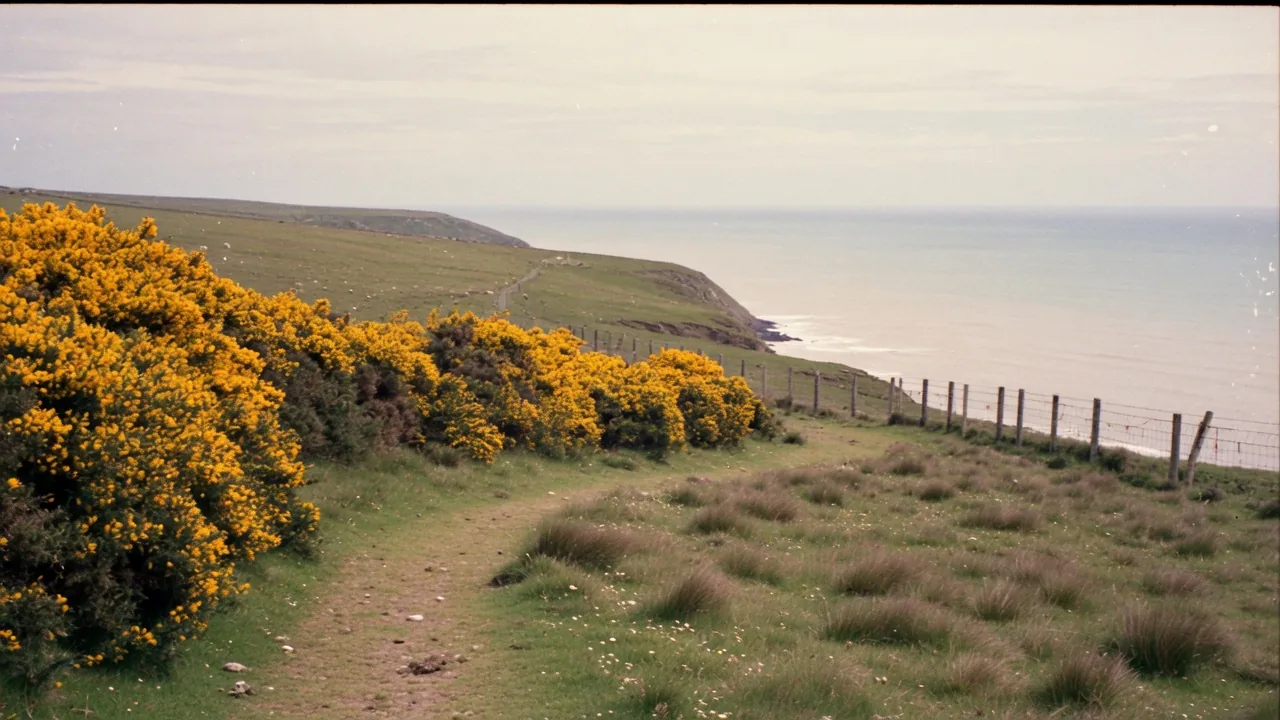
This is the first week the county remembers what it is. The clifftop gorse goes yellow in April and May, and the limestone in the south puts on orchids in June. Thrift, sea campion and spring squill follow the path. The days lengthen. The boats start.
Puffins are the other spring argument. They are on Skomer from roughly April to late July, with late May and June the peak, nesting beside the paths. By August they have gone back to sea. Landings need booking well ahead and they cancel for Jack Sound as often as for wind. Our islands guide is the operational document; this page is only saying that if puffins are why you came, you are a May–June visitor, not an August one. Have a fallback day. The Elegug Stacks hold guillemots at close range from land, when the range is open.
Carew Castle and the millpond are at their best in this stretch: the castle on longer hours from late March, the mill open, the water full of birds. Whitesands is working as a surf beach but the sea is still cold. Broad Haven on St Bride’s Bay has the village behind it and is not yet a school-holiday playground.
Late May half-term is the exception. Treat it as a small August: beds, boats and the popular parks tighten. In 2026 that week was 25–29 May, and the Celtic Coaster around St Davids went to a half-hourly timetable for it.
Welsh and English calendars overlap but they are not the same shape, which is why a “quiet July” is a myth for anyone watching the south-east.
Pembrokeshire schools in 2026 broke for Easter from 30 March to 10 April, for May half-term 25–29 May, and finished the summer term on 20 July. English schools typically run later into July and through August. The result is a long, lumpy peak: Easter, a spike at late May, then a solid block from mid-July to the late August bank holiday. October half-term is a smaller version of the same.
If you have children, those are the weeks you have. Book the bed first, then the Skomer boat, then Folly Farm if that is the wet-day plan. Arrive at the honeypot parks before nine, or use the coastal buses. See parking and Pembrokeshire with kids. If you can move a date, move it off those weeks.
August is the point of the south-east. Tenby, Saundersfoot and the family beaches are full. A table at seven needs a booking. The Coast Path is still the Coast Path, but the sections out of Tenby, Stackpole and St Davids are a procession rather than a walk.
It is survivable, and it is why a lot of people come. Get up early, put the north or the Preselis in the middle of the day, and treat Tenby as a morning or an evening, not as a circling exercise. The days out page has ready-made routes; this page is only saying August is not a drifting month. The sea is climbing toward its warmest, but it is not there yet. Skomer’s puffins, if you have come for them, are leaving.
This is the month we would pick.
School has gone back. The light goes low and gold along St Bride’s Bay. Sea temperature peaks in late August and September, which is when people who live here swim. Whitesands and Broad Haven still have lifeguards toward the start of the month; check the flags, because the season has an end date and it is not the same every year. A wetsuit turns a two-month season into a six-month one. Our beaches guide is the rest of that choice.
You can park. You can get a table. The gorse is over; the heather on the Preselis is not. Days shorten. By the end of the month you want to be off St Davids Head with a margin of daylight. Waterproofs stay in the bag. The crowds do not.
July sits between the two. Busy from mid-month around Tenby, bookable, and the month inland visitors think of as peak Pembrokeshire. It is not August, and it is not May.
October half-term is a spike, not an August. The south-east fills for a week and empties again. Some seasonal buses have already stopped; some harbour cafés are winding down. Check before you plan a linear walk that depends on the Puffin Shuttle.
Grey seals pup on the beaches below the cliffs from late August into the autumn. Ramsey Sound, Strumble Head and the north coast are the places, and the pups are white and very visible from above. This is the other great Pembrokeshire wildlife spectacle, and unlike the puffins it does not need a boat. Stay on the clifftop. The beaches they use are not a viewing platform.
November is the start of the winter county: shorter days, fewer boats, Carew on its last weeks before the mill closes, and a Coast Path that has stopped performing.
Winter is when the Pembrokeshire Coast Path earns the rest of the year. The kiosks shut. The boats stop. What remains is 190 miles of clifftop, empty, with the big Atlantic seas that the postcards never show. Newgale comes over the shingle bank. Freshwater West is enormous in a swell. Porthgain and Abereiddi take the weather in a way that looks better than a July afternoon.
It is the best walking season on the path if you can handle daylight that dies at four, clay that is slippery, and a café that may not be open when you reach it. Stand well back from cliff edges — they are unfenced and undercut. Never stand on a harbour arm in a big sea. Every winter someone forgets.
The county does not close. St Davids Cathedral carries the wet hours. Pembroke, Picton Castle Gardens and Carew (on its winter timetable — check) give you towers. Folly Farm’s indoor funfair is the family answer. The rain guide applies in January as much as in July. Christmas to New Year is the winter version of a bank-holiday spike: fewer attractions, fuller town parks. A midweek in February is not.
Worth understanding before you pick a month, because it changes which month is even the question.
The south — Tenby, Saundersfoot, Pembroke, Manorbier — is busier, slightly warmer, better supplied with family attractions, and the half that August actually fills. It is where most visitors go.
The north — St Davids, Fishguard, Newport, the Preselis — is quieter, more Welsh-speaking, wilder, and considerably less visited in every month including August. The coast is higher. The beaches are emptier. The prehistory is denser. A week of gorse and puffins lives here. A week of Folly Farm and three town beaches lives in the south.
A week split between the two, in May or September, is the visit a lot of August people think they had.
May for the gorse, the first puffins, and a county that still has room. June for the long evenings and the boats. September for the year in miniature — the warmest sea, the Coast Path to yourself at tea-time, a table in St Davids or Narberth. January for the cliffs, if you can live without the café.
Easter and August on purpose, with a north-coast afternoon in the plan and a bed already paid for. Half-terms as small versions of the same, not as quiet windows. Skomer as its own holiday in May or June, not as a surprise bolted onto a Tenby week in August.
Pembrokeshire does not close. The south gets full, the weather comes in, or both. The north, the Preselis and the shoulder months are why that is survivable. Pick the month that matches the trip you actually want, not the month the rest of England is also free.