Picton Castle stands above the Eastern Cleddau seven kilometres east of Haverfordwest, and it is a rare thing: a medieval castle that has been continuously lived in rather than ruined.
Built around 1300 by Sir John Wogan, it was held by the Philipps family from the fifteenth century until it passed to a charitable trust, and it was remodelled in the eighteenth century into a country house without losing its medieval core. The result is a building with drum towers and Georgian windows in the same wall.
The gardens are the main event, and they cover about forty acres.
The Woodland Garden is the centre of it — mature oak and beech underplanted with a rhododendron and camellia collection of national importance. Picton holds champion specimens and a number of hybrids bred here, and the display from March to June is exceptional.
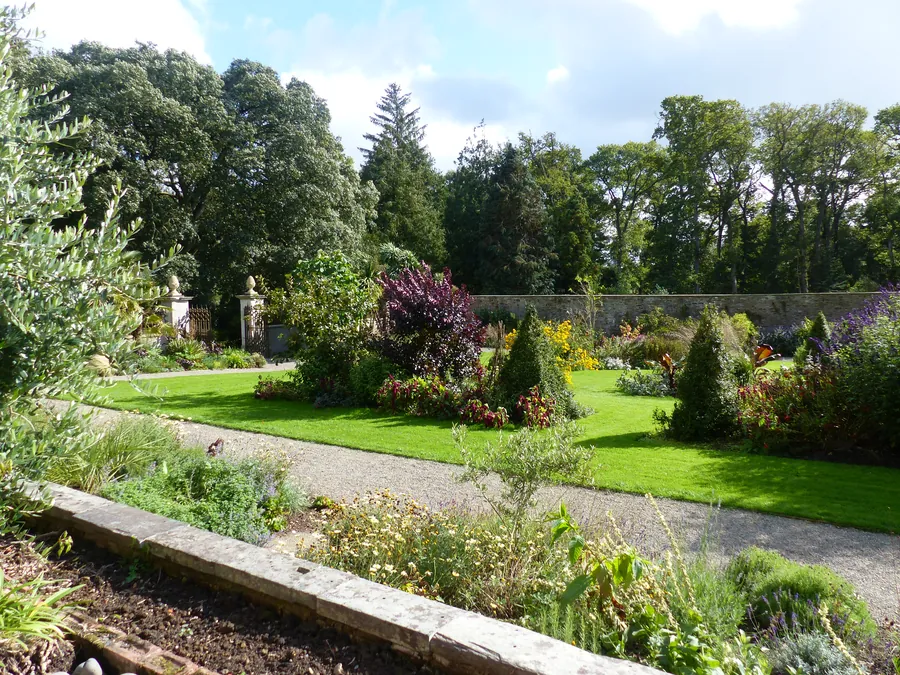
The Walled Garden — a formal enclosure with herbaceous borders, a fernery, a rose garden, a herb garden and a fountain. Well kept and, in high summer, the best part of the site.
Maze, wildflower meadows, and woodland walks through the estate, including down towards the Cleddau.
Champion trees — Picton has several British and Welsh record specimens.
A nursery and plant sales with unusual material.
The garden is at its most spectacular in late spring; the walled garden carries it through summer; autumn colour and a winter walk make it worth the trip out of season too.
The castle interior is not always open. It operates on limited days and by guided tour, and it closes for private events and for conservation work.
A number of visitors arrive expecting to see inside and find it shut, and say so. Check the castle opening as well as the garden opening before travelling — the two are advertised separately.
When it is open, the tour covers the medieval undercroft, the Georgian rooms and the family collection.
A restaurant and a coffee shop, both of which reviewers single out.
A second-hand bookshop and craft and gift outlets.
Children’s play areas and trails, which make it work better with a family than a garden of this seriousness usually does.
Events through the season — plant fairs, craft fairs, and outdoor performances.
Admission charged; described as not too expensive for what it covers.
Time: two to three hours in the gardens alone, and longer once the castle and lunch are added. Reviewers keep reporting that they underestimated it.
Parking: plentiful and free on site.
Facilities: restaurant, coffee shop, shops, toilets.
Access: the walled garden and the main paths are largely manageable; the woodland walks have slopes and unsurfaced sections.
Dogs: on leads in the grounds.
Season: the gardens open widely; the castle does not. Check both.
Off the A40 east of Haverfordwest, signposted, about ten minutes by road.
The Daugleddau — the wooded inland estuary where the Eastern and Western Cleddau meet, the quietest part of the national park, with walks from Landshipping and Lawrenny.
Haverfordwest is ten minutes west, with its own castle ruin and a good priory site.
Carew Castle is fifteen minutes south-east.
Only on selected days, and only with a tour; events and conservation work close it as well. Check castle opening separately from garden opening before travelling.
Come between March and June if the rhododendrons and camellias are the draw; after that it is the walled garden doing the work.
Two to three hours for the gardens, and visitors regularly wish they had allowed more.
Yes, plentiful and free on site.
Better than most serious gardens — there are play areas and trails as well as space to run.